
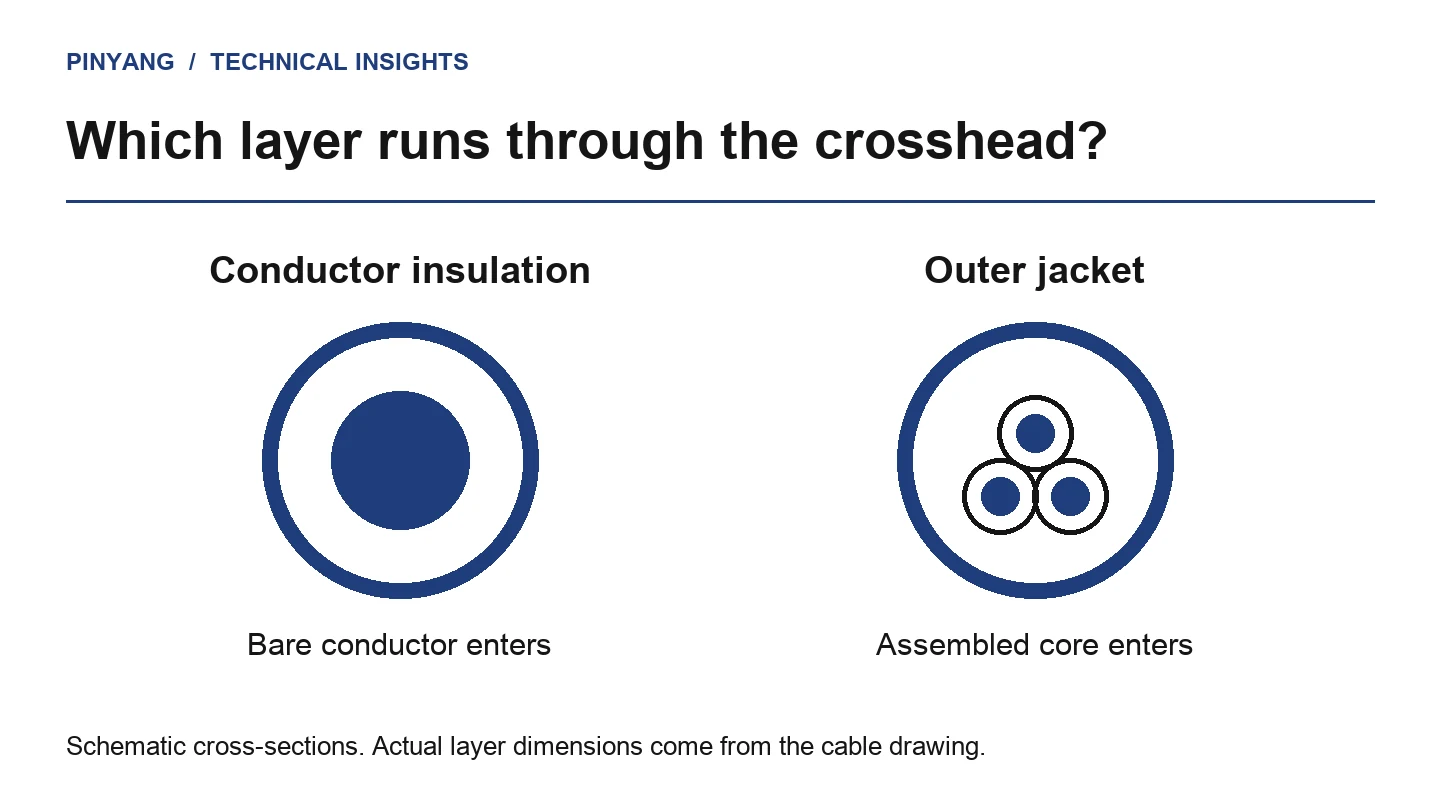
If you are buying a line to jacket an assembled cable, the supplier needs the diameter over the assembly. If the job is to insulate bare wire, the starting measurement is the conductor. An enquiry that gives only the finished diameter leaves that distinction open.
Mark the incoming core and the layer to be added on one drawing. Use that drawing when you compare the line layout, the output calculation and the material for the trial.
Four decisions that define the extrusion line
1. Layer: Which layer will this pass add?
For insulation, give the conductor construction and incoming diameter. For a jacket, measure over the assembled core, including any tape or screen under the jacket. Specify the finished outside diameter and the minimum wall separately. Two cables with the same finished diameter can place different demands on the head and tooling.
2. Compound: Which grade and layers must the head handle?
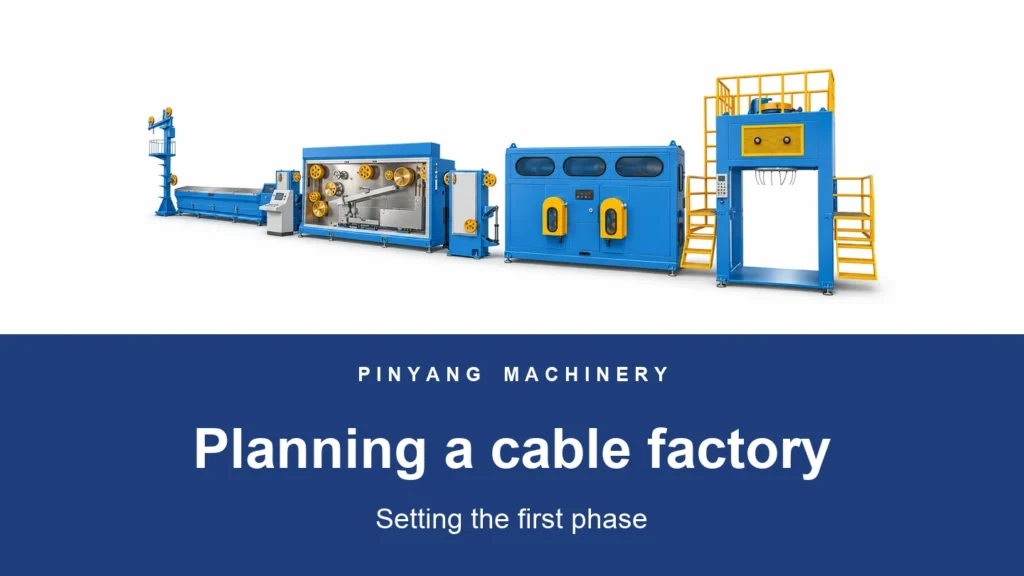
Identify the compound by grade, and attach its supplier data sheet. A colour stripe, a second polymer layer or a cellular layer changes the material path. The cable extrusion equipment families are a starting point once you can name the layer.
What to ask
“For the grades on this drawing, which head and tooling are included? If we change to the striped version, what must we change or add?”
3. Interfaces: Which units will feed, pull and collect the cable?
Start at the supply reel and trace the product through the crosshead, cooling section, haul-off, inspection point and take-up. Ask who supplies and connects each unit. If you retain an existing haul-off, record its speed reference, material-contact surface and usable diameter range.
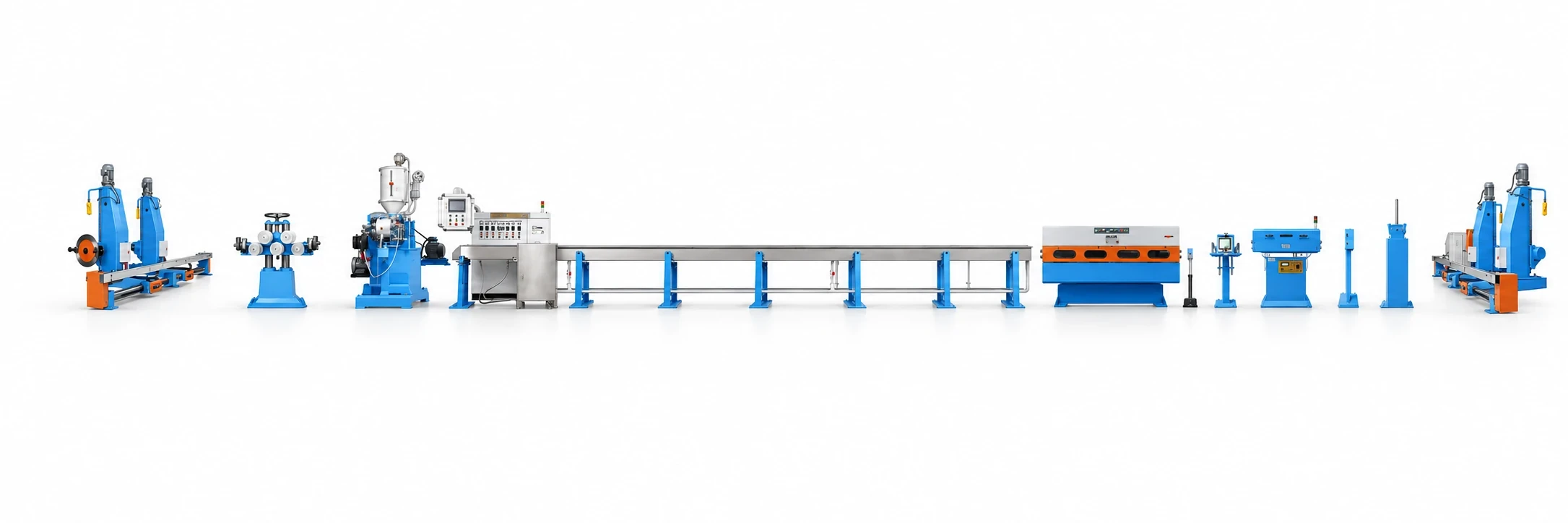
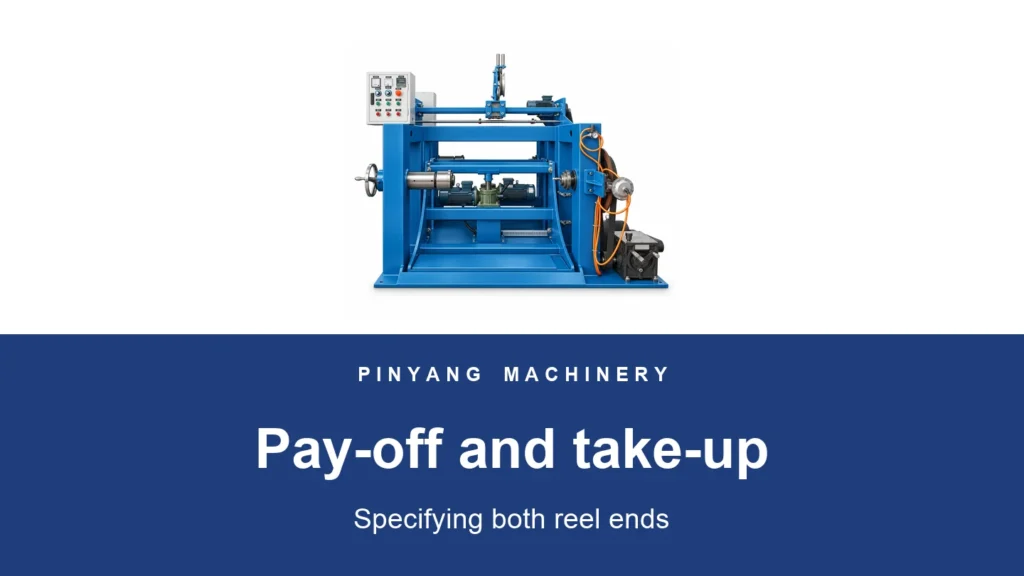
Work back from the receiving reel as well. The pay-off and take-up checklist covers loaded mass, traverse and control ownership. For a multicore product, the power cable production route puts the jacketing pass in context.
4. Supply scope: What is included in the quoted configuration?
Mark each item as included, optional or buyer-supplied. For a retained unit, name who supplies the connection, what signal or material crosses it, and who will demonstrate that the two units work together.
| Package | Items to identify |
|---|---|
| Core machinery | Extruder, crosshead, cooling, haul-off and reel systems. |
| Options & consumables | Tooling, selected inspection, reels and agreed spare parts. |
| Site inputs | Power, cooling, access, material preparation and foundations where applicable. |
| Project services | Layout, installation responsibilities, training and agreed acceptance checks. |
Convert polymer output into finished metres
An extruder output in kg/h and a finished cable speed in m/min describe different quantities. Estimate the mass of the applied layer per metre, using the actual compound density. Guill’s extrusion rate calculators give a second way to check the relationship.
| Calculation step | Illustrative input or result |
|---|---|
| Area of the applied layer | For a round 2.0 mm core and 3.0 mm finished diameter, π × (3.0² − 2.0²) / 4 ≈ 3.93 mm². |
| Polymer mass per metre | At an assumed compound density of 1.30 g/cm³, the layer needs about 5.1 g/m. |
| Theoretical line speed | 60,000 g/h ÷ 5.1 g/m ÷ 60 min/h ≈ 196 m/min before losses. |
Decision criterion
Irregular cores, compound entering strand gaps, eccentricity, cooling, changeovers and rejected lengths affect actual output. Request measured saleable metres for one agreed cable and run duration.
Agree what the trial reel must demonstrate
Ask for one labelled reel and the measurements behind the quoted output.
Identify the drawing revision, compound batch, reels and usable sample length. Agree where diameter is measured and how wall thickness is checked on a cut sample. Ask for the run duration, speed trend, accepted length and any time lost to changeovers.
Evidence to request
Use these inputs to agree the trial product and record which items still need a drawing or data sheet.
- Cable drawing and target diameter range
- Conductor or incoming core construction
- Insulation or sheath compound grades
- Required output for the actual product mix
- Supply and take-up reel dimensions and weights
- Existing equipment, utilities and available space
If several products share the proposed line, identify the construction that limits the head or cooling section. Ask the supplier to name the tooling and changeover for the next product before treating the whole range as covered.
Put these conditions next to the quoted output in your cable machinery RFQ. That makes it possible to compare the same product and inspection basis across offers.
Your next step
Turn this guide into a useful project brief
Carry the preparation questions into your brief, then add your cable and factory requirements.
Prepare my project brief Prepared locally. No inquiry is sent.