Conductor formation

Wire Bunching & Stranding Machines

Double-twist bunching, arch-type, planetary, rigid-frame and tubular stranding equipment for conductor formation. Start with individual wire size, strand count and finished cross-section.

Explore the selection guide
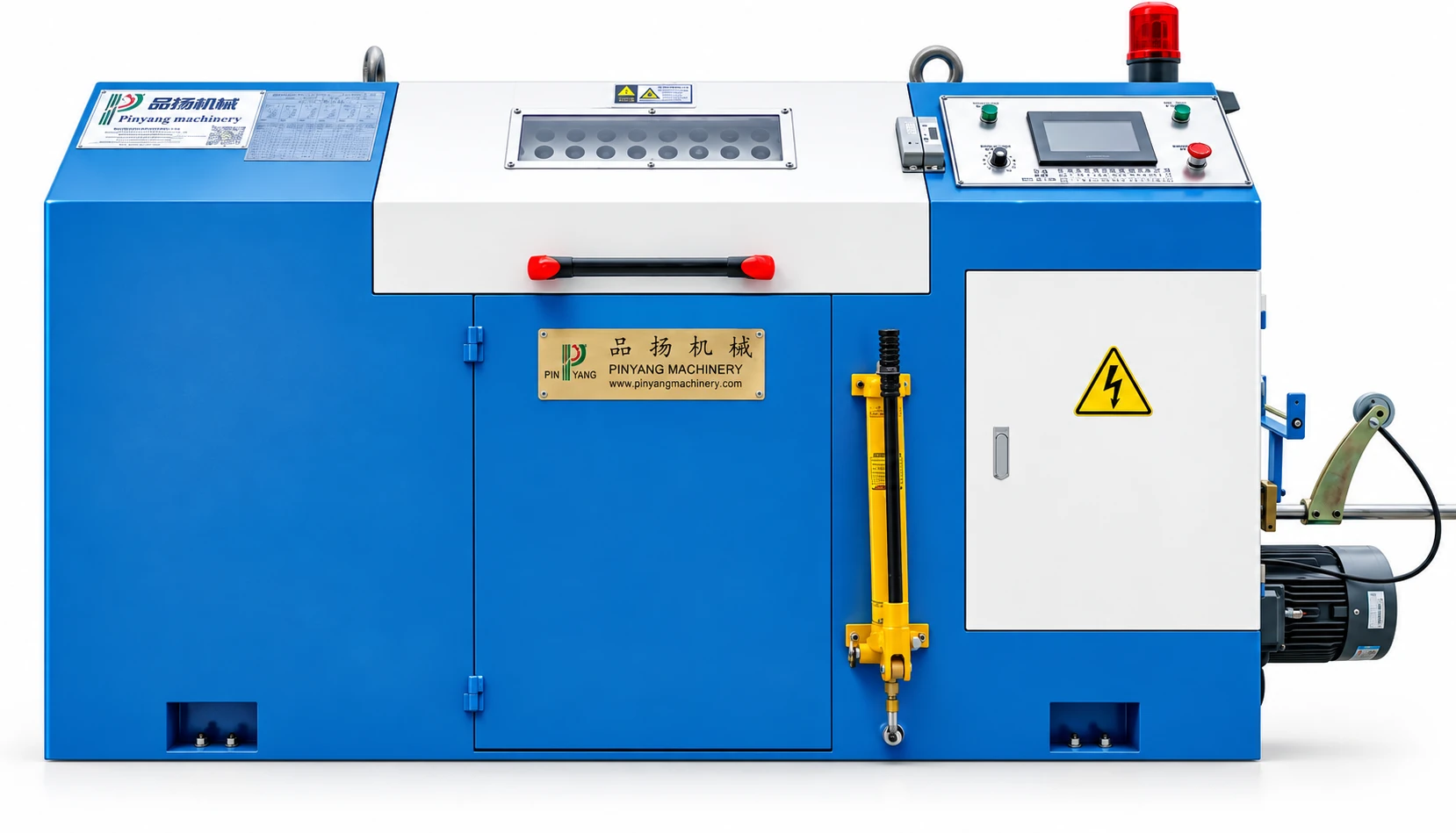
High-speed bunching machine

Choose the equipment for your operation

Double-twist bunching, planetary, rigid and tubular stranding for different conductor constructions.

Bunching & Stranding catalogue equipment example
Conductor formation

Start with what the machine needs to do.

Material entering the machine
Drawn or annealed wire
Required result
A conductor ready for insulation

Match the working range, material handling and controls to this operation.

Double-twist bunchingFlexible conductor preparation

Confirm before selectionWire count, single-wire diameter, finished cross-section and take-up reel.

Arch-type strandingBunching and cable assembly

Confirm before selectionAssembly diameter, pitch range, reel loading and downstream process.

Planetary strandingStructures requiring controlled element orientation

Confirm before selectionCore construction, back-twist requirement and bobbin arrangement.

Rigid-frame & tubular strandingSpecified stranded conductor structures

Confirm before selectionWire layers, conductor material, reel sizes and required configuration.

Which situation matches your project?

Open the operation you need, then review its configuration inputs.

Bunching & Stranding
Bunching & Stranding · catalogue equipment example
Making a flexible conductorThe drawing specifies a bunch of individual fine wires.
Review together
Review double-twist bunching against single-wire size, strand count, finished cross-section, lay and take-up reel.
Next decision
Provide the conductor drawing and individual-wire specification.
Making a specified strand structureThe conductor requires a defined layer arrangement or element orientation.
Review together
Review planetary, rigid-frame or tubular stranding against the construction and any back-twist requirement.
Next decision
Provide the strand arrangement, material and required lay direction.
Replacing an existing buncherA current machine limits your product range or workflow.
Review together
Compare the required conductor range with pay-off capacity, lay, take-up and the surrounding process.
Next decision
Share current machine details, the limitation and the products you want to add.
When the scope changes

Conductor bunching works with individual wires. Pair twisting works with insulated cores, and cabling assembles cores or pairs. Define the incoming material before choosing the machine family.

Compare reference configurations

Check the differences that matter to your product. Final selection follows a technical review.

High-speed bunching: reference model comparison

2026 catalogue · p. 16

Choose two models to compare.

PY-Φ500 compared with PY-Φ630
SpecificationPY-Φ500PY-Φ630
Single wire Ø (mm)0.06–0.450.10–1.05
Max. area (mm²)2.510
Lay length (mm)4.22–1008.54–140
Take-up Ø (mm)500630
Add a model to your brief

Values apply to the listed bunching models, not the entire stranding range. Material, strand construction and lay must be reviewed together.

View all reference models
All catalogue reference models for High-speed bunching: reference model comparison
ModelSingle wire Ø (mm)Max. area (mm²)Lay length (mm)Take-up Ø (mm)
PY-Φ5000.06–0.452.54.22–100500
PY-Φ6300.10–1.05108.54–140630
PY-Φ8000.2–1.51622.51–152.32800
PY-Φ10000.3–3.02535–2001000

Catalogue figures are reference values. Material, product dimensions and the agreed configuration determine operating output and the final technical specification.

What determines the configuration?

Review the choices behind the equipment package.

Bunching & Stranding
Catalogue equipment example; configuration follows your product.
Check two size limits

Individual wire diameter and total conductor cross-section are separate selection inputs. A suitable finished area does not by itself establish that every wire size is compatible.

Define the conductor construction

Flexible bunches and specified concentric strand layers require different process reviews. Share the strand arrangement, lay and material before choosing a stranding method.

Include reel handling

Take-up diameter affects loading and the next operation. Confirm reel dimensions, loading weight and transfer to insulation extrusion as part of the equipment selection.

Check the connections around the machine.

Input, equipment and output must work as one connected process.

Incoming materialDrawn or annealed wire
Bunching & Stranding
Required outputA conductor ready for insulation
Drawing to pay-off

Confirm wire dimensions, condition, supply-bobbin count, reel dimensions and loading arrangements.

Conductor to insulation

Agree finished construction, diameter or cross-section, take-up package and transfer to extrusion.

Target output to the process

Use the actual conductor and lay when reviewing output; match working hours and handling assumptions across stages.

From this operation to your production line.

See the role of this equipment in each cable project, then open the complete route.

High-speed bunching machine

Solar Cable

Form the specified flexible conductor before solar-cable insulation.

Confirm firstConfirm individual-wire diameter, strand count, cross-section and transfer reel.

Stranding equipment from the catalogue

Power & Building Cable

Form the stranded conductor required by the power-cable drawing.

Confirm firstThe strand arrangement determines the stranding method; the photograph is an equipment example.

Bunching machine with its enclosure open

Power Cord

Build flexible conductors for the individual power-cord cores.

Confirm firstThis stage produces conductors; plug molding and termination are outside this equipment selection.

High-speed bunching machine

USB & Data Cable

Combine fine wires where the data cable specifies stranded conductors.

Confirm firstConfirm the fine-wire range and tension needs against the selected model.

Define your equipment package

Agree the main machine and supporting items together before comparing proposals.

Specify in the equipment list

  • Bunching or stranding machine for the conductor design
  • Pay-off count and wire tension arrangement
  • Lay range, direction and take-up reel
  • Wire-break detection and machine control requirements

Confirm the related requirements

  • Supply reels, loading weights and handling equipment
  • Upstream drawing or annealing equipment
  • Conductor acceptance requirements and sample run

Compare the proposal, not only the model.

Is the proposed conductor construction demonstrated at your required working conditions?

Use the same product and scope when comparing suppliers.
DecisionWhat to checkWhat to request
Conductor constructionCompare the same individual wire size, strand count, total cross-section and lay. Different constructions can require different machine types.A conductor schedule mapped to the proposed bunching or stranding configuration.
Finished conductorAgree the checks for lay, finished dimensions, surface condition and reel winding on the selected product.Representative wire requirements and a recorded trial/inspection plan.
Pay-off & take-upConfirm the number of wire sources, input reels, take-up format and tension-control responsibilities.An itemised handling package and reel compatibility drawings.
Output comparisonEvaluate the agreed conductor at a defined production condition. Rotational speed alone is not finished metres per shift.Output assumptions including loading, reel changes and product changeovers.

What changes the quotationConductor construction, working range, pay-off count, tension control, reel loading and the selected stranding method change the package. Mark tooling, supporting units, site works and services as included, optional or buyer-supplied before comparing prices.

Define a useful equipment trial.

Agree the representative product, incoming material, setup, run conditions, measurements and records before the trial. Confirm the acceptance criteria together; a catalogue maximum is not a guaranteed result for every product.

Prepare your selection requirements

Conductor

Material, single-wire diameter, strand count and finished cross-section.

Lay & tension

Required pitch, direction and handling needs for the wire construction.

Reels & workflow

Pay-off bobbins, take-up reel dimensions and loading arrangements.

Production plan

Product mix, required output, changeovers and available floor space.

Equipment questions

Bunching or stranding: where do we start?

Start with the conductor drawing and the intended cable. The construction, individual wire size, required lay and reel arrangement guide the equipment discussion.

Can this be part of a complete line?

Yes. The catalog covers drawing, conductor formation, insulation, cabling and sheathing. We can discuss the equipment combination around your product.

Can an existing conductor process be upgraded?

Share the current machine details, product range and the bottleneck you want to address. Compatibility with upstream reels and downstream equipment should be reviewed before selection.

Can I select a buncher by reel diameter alone?

No. Reel diameter is only one limit. Compare individual wire diameter, strand count, total cross-section, material, lay length and take-up requirements.

Does maximum rotating speed equal production output?

No. Lay length, conductor construction, setup and operating conditions affect achievable output. Agree the production requirement for your actual conductor rather than treating maximum rpm as a daily capacity.

Your Project Brief

Share the cable you want to make and the scope of your project.

Sample site: prepare and download a project brief locally. No inquiry is sent.